
Market in rebalance: a real opportunity for buyers in Florida 2026
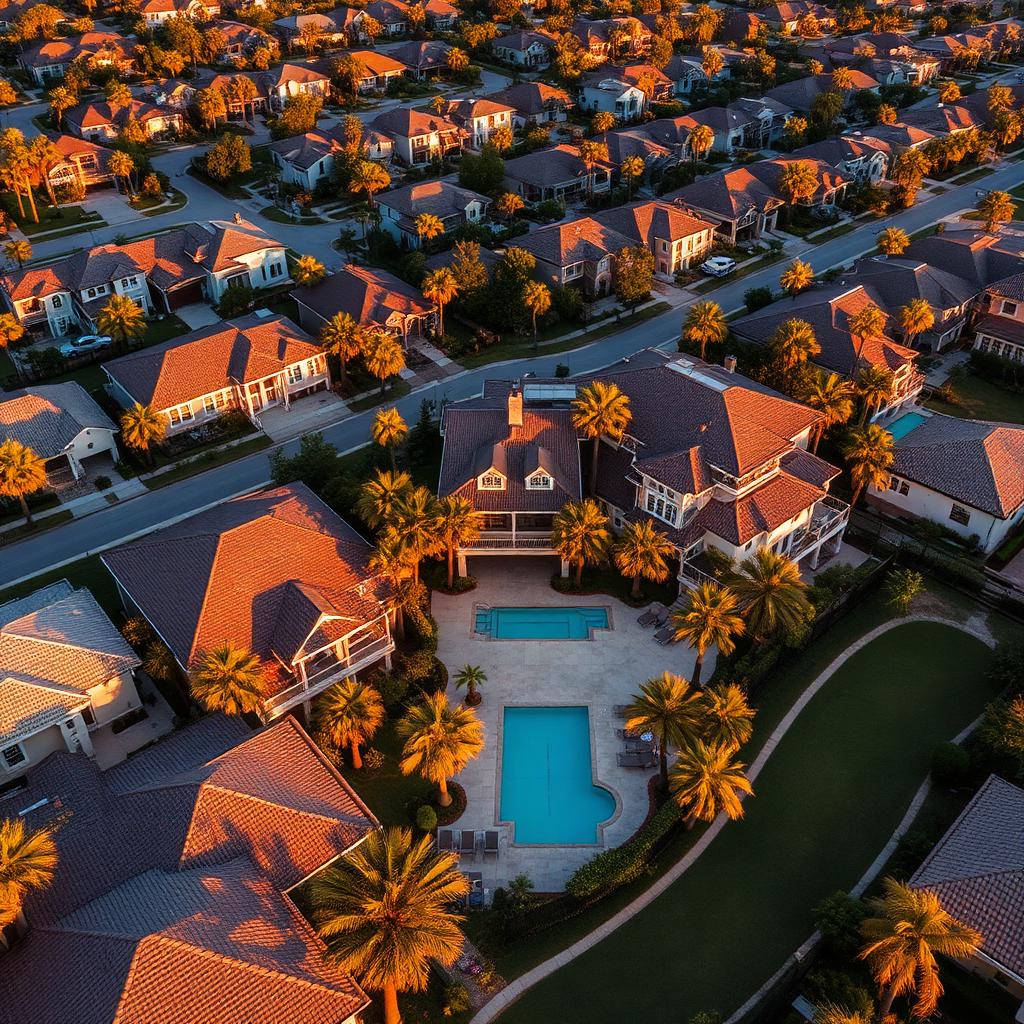
Florida's real estate market just lived a five-year cycle that can be described in three words: boom, chaos and — now — normalization. For anyone who sat out the 2021 and 2022 frenzy, 2026 offers something rare: time to think, room to negotiate, and data pointing to a real window of opportunity.
This isn't a sales pitch. It's what leading industry economists — including Florida Realtors chief economist Dr. Brad O'Connor and NAR (National Association of Realtors) deputy chief economist Dr. Jessica Lautz — are saying publicly in 2026 conferences and reports.
But understanding why this moment is an opportunity requires first understanding where the market came from — and why today's normalization is not the same as a collapse.
The cycle that just ended
2020–2021 · The boom. Mortgage rates at historic lows. Remote work freeing buyers from any city. Demand for space exploded. Homes in Orlando and Kissimmee received multiple offers within 48 hours, many over asking. Sellers dictated every term.
2022–2023 · The turn. The Fed raised rates from 0.25% to 5.5% in 18 months — the fastest hike in 40 years. 30-year mortgages reached 7.8%. Financed buyers were pushed out. Inventory grew. The frenetic pace stopped abruptly.
2024–2025 · The stall. The market froze. Sellers wouldn't accept lower prices (many had refinanced at 3%), and buyers weren't comfortable with 7% mortgages. Transaction volume fell to its lowest level since 2014.
2026 · The rebalance. Rates have eased to the 6% to 6.5% range. Inventory has grown significantly. Homes are sitting on the market longer. Buyers now have more options, more time and more negotiating power than at any point since 2019.
What the current data actually shows
The current numbers tell a clear story: 69 average days on market in Florida in 2026; more than 200,000 homes available for sale statewide; and 9.7% more homes sold in May 2026 versus May 2025 — the market is moving again, but on terms much more favorable to buyers than three or four years ago.
Comparing 2021 and 2026: average days on market jumped from 8–12 to 69–84; over-asking offers fell from 60% of homes to 9.9%; price reductions went from rare to 20.2% of listings; 30-year mortgage rates moved from 2.9–3.2% to 6.0–6.5%; and bargaining power shifted entirely from sellers to a balanced or buyer-favorable environment, with concessions — closing costs, repairs, credits — now common.
Why 6% rates are different from what they look like
The most common pushback we hear from hesitant buyers is: "I'll wait for rates to come down." It's an understandable strategy, with one important mathematical flaw.
NAR's deputy chief economist calculated that a drop from 7% to 6% in mortgage rates brings more than 6,000 additional buyers per month to the Orlando market alone. If rates fall significantly, pent-up demand will enter the market at once, prices will climb and today's bargaining power will disappear fast.
Waiting for lower rates may mean waiting for the exact moment everyone else also decides to buy — turning an opportunity into a competition. The combination of buyer-favorable conditions and acceptable rates is transitory.
What new construction is offering in 2026
Perhaps the least-discussed aspect of today's window is what national builders are offering to clear inventory. D.R. Horton, Lennar, Toll Brothers and Meritage — all of which built aggressively in the Orlando corridor in communities like Horizon West, Kissimmee, Clermont and Winter Garden — are competing hard for buyers.
Two-thirds of builders are offering mortgage rate buydowns, lowering the effective rate to roughly 5.27% — versus 6%+ for existing homes. 40% are cutting prices directly on inventory homes. Closing cost credits of US$ 10,000 to US$ 25,000 are common in new-construction contracts. Structural warranties of 1, 2 and 10 years are included — something existing homes don't offer. And finish customization at no extra cost is standard in many Orlando-corridor projects.
On a US$ 430,000 new home in Kissimmee or Clermont with a rate buydown, the monthly payment difference between 6.5% and 5.27% is roughly US$ 340 per month — about US$ 4,080 per year. Over five years, that's more than US$ 20,000 in direct savings, on top of lower operating costs thanks to the builder's warranty.
Orlando's fundamentals protect the investor
Real estate markets that collapse share one trait: the absence of real, sustained demand. Orlando doesn't fit that profile. The city maintains consistent population growth, with more than 100 new residents arriving daily in the metro area. That creates structural housing demand that goes well beyond speculation.
Four pillars support that demand. Theme park tourism: Disney World, Universal and SeaWorld generate constant year-round rental demand from buyers across many nationalities. Lake Nona Medical City: a medical-tech hub with more than 30,000 high-income jobs, creating permanent residential demand on the east side. Tech and defense expansion: Lockheed Martin, Raytheon and tech companies keep expanding, bringing in high-income professionals. Strong schools: families from across the country and abroad relocate to Orange and Osceola counties specifically for the school districts.
These pillars — tourism, medical, tech and education — create multiple, overlapping sources of housing demand that reinforce each other. That's very different from markets dependent on a single industry or pure speculation.
The buyer who will miss this window
Not every buyer profile benefits equally from this moment. It's important to be honest about that.
Who loses this window: the buyer who waits for the "perfect" price — which probably won't come, because the market won't collapse; those waiting for sub-5% rates before buying — while they wait, others will take the best-value inventory; buyers without pre-approval who lose well-priced homes to ready buyers; and those analyzing the statewide market as a single thing while ignoring that Orlando has its own dynamics, more favorable than many other Florida regions.
The buyer who will take advantage
On the other side, the profile with the most to gain is clear: stable income, a five-plus-year horizon, capital for a 10% to 20% down payment, and the willingness to act when the right home appears — without waiting for a perfection real estate markets never deliver.
For homes in the Disney corridor — Kissimmee, Davenport, ChampionsGate, Clermont and Horizon West — the 2026 market offers more choice than at any point since 2019, more time to decide, more flexible sellers and unprecedented builder incentives. It's the combination rational buyers wait years for.
What the experts are saying
Dr. Brad O'Connor, chief economist at Florida Realtors, captured the moment precisely in January 2026: "What we're seeing now is a market that is normalizing, and that creates real opportunity for buyers, sellers and investors. We see no reason to be pessimistic about the performance of the real estate market in 2026."
NAR projects a 14% increase in existing-home sales in 2026 nationally, with fast-growing states like Florida carrying outsized impact. The expert argument is consistent: the market is normalizing, not collapsing. And normalization after years of frenzy is, historically, the best time to buy.
One important caveat: the Florida home insurance crisis is real and can't be ignored. Before closing any purchase — especially older condos or coastal areas — get insurance quotes from multiple carriers. For inland Orlando-area homes, the impact is smaller than on the coast, but due diligence is non-negotiable.
Conclusion
Florida's real estate market isn't in crisis — it's normalizing. And normalization, after a historic peak, is the window in which long-term buyers build wealth. With expanded inventory, sellers negotiating, builders offering aggressive incentives, and rates stabilizing at manageable levels, 2026 offers conditions that haven't existed since before the pandemic. For anyone with a clear goal, available capital and a focus on the Orlando corridor — one of the most diversified and resilient economies in the southern United States — this window deserves serious attention.
Sources and references
- Florida Realtors — 2026 Real Estate Trends Summit, Dr. Brad O'Connor
- National Association of Realtors — Dr. Jessica Lautz, 2026 Market Outlook
- Redfin — Florida Housing Market Data, May 2026
- Norada Real Estate — Florida Housing Market Forecast 2026-2027
- HouseCanary — Florida Housing Market Update 2026
- Florida Realtors — Housing Enters 2026 on Firmer Ground, January 2026
- Moving to Florida Guide — Market Expert Roundup, June 2026