
Revenue management: why a fixed price can destroy the profit of a vacation home
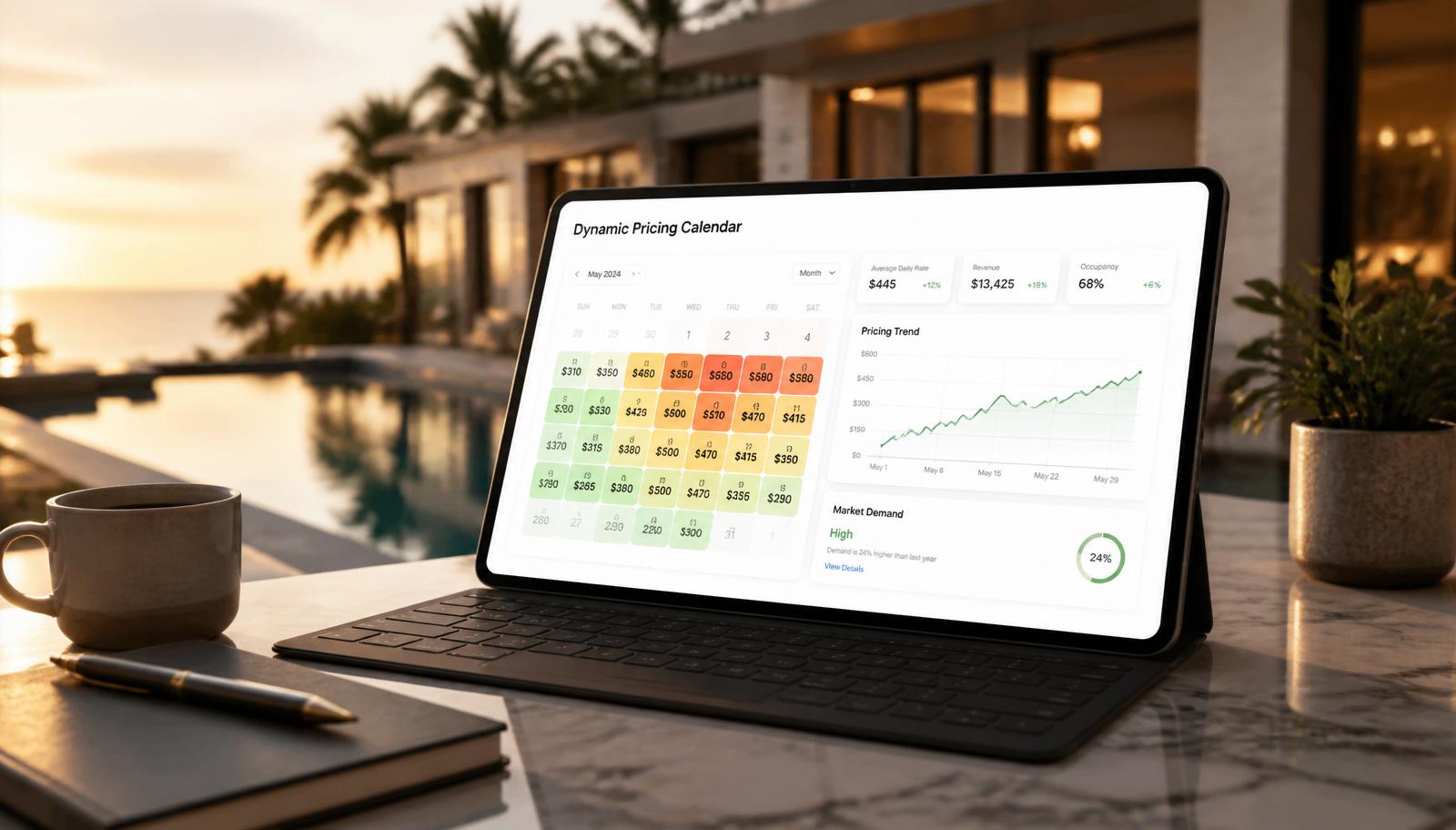
Many vacation-home owners still set prices emotionally. They look at the property, think about the mortgage cost, check two or three nearby homes and pick a nightly rate that "feels fair." Then they leave that price untouched for weeks or months. This is one of the most expensive mistakes in the vacation-rental market.
Why a fixed price is the costliest mistake
A vacation home isn't worth the same every day. A Saturday night in high season is not worth the same as a Tuesday in low season. Holidays, local events, sports finals, school breaks, weather, booking lead time and demand pace completely change the ideal price. That's why revenue management is no longer just a tool for big hotels — it has become essential for short-term rental owners.
The logic is simple: the product is perishable. If a night isn't sold, it can't be recovered later — an empty night yesterday is lost revenue forever. At the same time, selling too cheap on a high-demand date is also a loss: the calendar fills up, but money is left on the table.
The goal isn't just occupancy — it's net revenue
The goal of revenue management isn't just to increase occupancy. It's to maximize net revenue and profitability. Sometimes, lower occupancy with a higher average daily rate produces a better result than a full calendar at aggressive discounts. The owner needs to track metrics like ADR, occupancy, RevPAR, booking window, pacing, length of stay and net revenue after fees.
Tools like PriceLabs offer dynamic pricing, market analysis, competitor comparison, recommendations based on demand, seasonality, events and holidays, plus minimum stay rules and KPI tracking for occupancy, ADR and RevPAR. This confirms that the sector is moving closer and closer to hotel-style logic.
But using a tool isn't enough — the owner needs to understand the strategy. A common mistake is letting the algorithm decide everything without human review. Each property has its own context: a newly listed home needs a different strategy than one with 80 reviews; a premium home shouldn't behave like an average one.
Tools help, but strategy decides
Another mistake is comparing against the wrong competitors. A 4-bedroom home with a pool, well decorated and close to the parks shouldn't be priced based on an old home with no pool and bad photos. The comp set must be realistic: same area, bedroom count, quality standard, amenities, reputation and distance to demand drivers.
Revenue management also involves minimum stay control. In high season, accepting very short reservations can break the calendar and block more profitable stays; in low season, requiring too many nights can create vacancy. Minimum stay should change according to demand, lead time and calendar gaps.
Another critical point is last-minute pricing. If a vacant date is just a few days away, it may make sense to drop the price to capture late demand — but with calculation. Going too low can attract problematic guests and shrink margin; not going low can leave the night empty.
Minimum stay, last-minute pricing and events
Events also require attention. In 2026, events like the World Cup impact host cities and nearby markets. Airbnb launched exclusive experiences tied to the FIFA World Cup 2026 and expanded its travel services, showing how major events reshape search and booking behavior. But the strategy must rely on real demand, considering location, guest profile and competition.
Another essential element is understanding the final price the guest sees. The advertised nightly rate isn't the only factor: cleaning fee, platform fee and taxes affect perceived value. A property may look competitive on the nightly rate but expensive on the total. Airbnb has invested in greater price transparency, including changes to display and fee structure. The right question is: is my price competitive on the total, or only on the nightly rate?
Total price, marketing and product diagnosis
Revenue management also talks to marketing. If a home has low conversion, the problem may not be price: it can be bad photos, weak copy, lack of reviews, restrictive policies or insufficient amenities. Lowering price masks the problem for a while but doesn't solve the cause.
The correct analysis combines market data with product diagnosis. If demand is high and the home isn't booking, maybe the price is too high or the listing is weak. If demand is low across the whole market, it may be seasonality. If competitors fill up and your home stays empty, there's a failure in positioning, price, reputation or presentation.
A fixed price is financial neglect
In today's market, a fixed price is a form of financial neglect. A vacation home needs to respond to the market with intelligence — not change everything every day without criteria, but follow data, adjust rules, understand demand and protect margin.
The owner who masters revenue management stops being a hostage to luck. They don't wait for the calendar to fill: they read signals, adjust strategy and decide based on data. In a more competitive market, that is the difference between a home that simply gets bookings and a home that actually generates profit.
Sources
- PriceLabs — Dynamic Pricing & Market Data
- Airbnb — 2026 Summer Release
- Airbnb — Service Fee Update